
Joyce and Miranda’s Secret Friendship
Hallowe'en PartyThis thread traces the close but unequal confidence between Joyce Reynolds and Miranda Butler, whose shared secrets shape the events that lead to Joyce’s death and Miranda’s rescue.
increasing Bearing strength in each event
 decreasing
Bearing strength in each eventdecreasingA Trusted Confidante
A Friendship of Secrets
Mutual Confidence
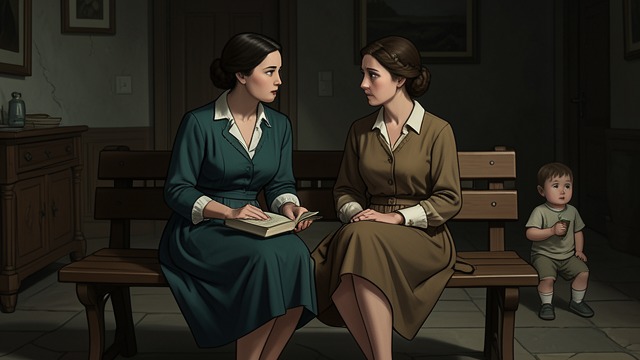
Miranda Butler tells Hercule Poirot that Joyce Reynolds was a great friend in a particular way: the girls shared secrets. Joyce spoke to Miranda about her supposed travels to India, while Miranda had her own private experience to confide.
The friendship matters because Miranda did not share her story broadly. She trusted Joyce with the account of something she had witnessed in the Quarry Garden, believing that a friend could hear it without immediately turning it into public gossip or accusation.
Unequal Storytelling
Joyce’s habit of boasting complicates the relationship. She had told Miranda extravagant stories about elephants, tigers, and India, and Miranda wished she had seen those things herself. Joyce’s stories made an impression, even though others in the village considered her unreliable.
Their bond is genuine but not equal in how each girl handles what she hears. Miranda entrusts Joyce with a serious memory; Joyce later repeats the claim as though the murder had happened to her, transforming a private confidence into a public boast.
The Quarry Garden Confession
A Secret Witnessed
What Miranda Saw
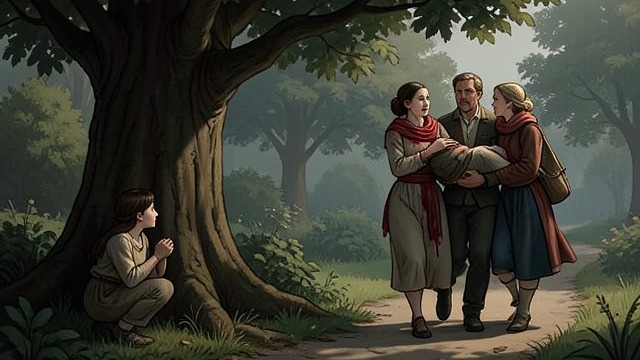
While watching squirrels from a tree in Quarry Garden, Miranda sees a man and a woman carrying an injured woman along a path. She notices blood on a scarf and a knife, but at first thinks the victim may have tried to kill herself or suffered an accident.
The woman looks toward Miranda’s tree and says that someone is watching. Frightened, Miranda stays still and tells no one, unsure what she witnessed and uneasy about having been secretly observing the adults.
A Confidence Shared
Miranda eventually tells Joyce what she saw. The confidence gives the memory a human recipient, but it does not bring the crime to light: Miranda is still too young to understand the scene as murder, and Joyce does not report it either.
The secret binds the girls while remaining dangerous. Years later, when Joyce boasts that she saw a murder, she is repeating Miranda’s experience rather than describing her own; the distinction is invisible to the adults who hear her claim.
The Borrowed Boast

A Confidence Becomes a Claim
Joyce Speaks Up
During the party preparations, Joyce announces that she once saw a murder. The other children and adults doubt her, consistent with the reputation she has acquired for inventing impressive stories to draw attention.
Joyce becomes angry when no one believes her, insisting that she really saw it and only later understood what it meant. Her words are not an account of her own memory, but she does not identify Miranda as the source.
Friendship’s Hidden Cost
Miranda is absent from the party because she is ill. Her absence means she cannot correct Joyce’s claim or explain that the story came from a private confidence between friends.
Rowena Drake hears enough to fear that Joyce may know about the earlier murder of Olga Seminoff. The trust between the girls, without either girl intending it, has carried a buried crime into the present and exposed Joyce to lethal danger.
A Friend Lost

Grief and Misunderstanding
Joyce’s Death
After the party, Joyce is found drowned in the galvanised apple-bobbing tub. Miranda has not attended the gathering, but the knowledge that her story reached Joyce connects the murder to their friendship.
Miranda later understands that Joyce had repeated her account. The friendship’s private trust has become entangled with the reason Joyce was killed: the murderer believes the boast may expose an older crime.
A Child’s Burden
Miranda feels responsible, thinking that Joyce would not have died if she had not told her what she saw. She also wonders whether the killing was a sacrifice, an interpretation shaped by Michael Garfield’s language and by her own effort to make sense of death.
Her grief is complicated by guilt rather than simple sorrow. Joyce was a friend who listened to her secret, and Miranda cannot initially separate the choice to confide from the murderer’s deliberate decision to silence the girl.
The Truth at Kilterbury
The Secret Finally Spoken
Miranda’s Testimony
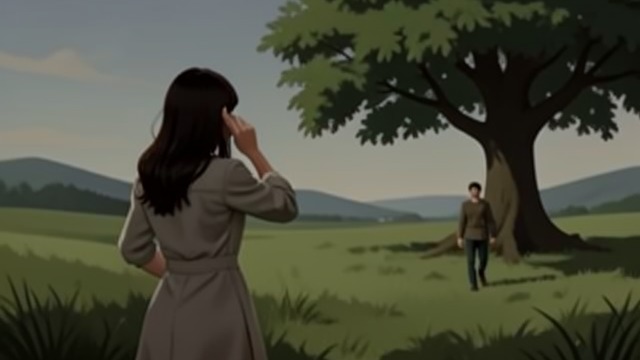
After the attempted killing at Kilterbury Ring, Miranda explains to the authorities that Joyce had not seen the murder herself. Joyce had repeated Miranda’s account, presenting it as her own in front of the party guests.
Miranda then describes what she saw in the Quarry Garden and how a later encounter, in which the same pair discussed an island, made her recognize the earlier scene as a murder. Her testimony restores the truth that the friendship’s secret had obscured.
Memory and Affection
Miranda’s account does not diminish her affection for Joyce. Instead, it clarifies how a child’s confidence, an unreliable reputation, and an adult’s fear combined to turn friendship into a fatal vulnerability.
The truth also releases Miranda from the mistaken belief that her disclosure itself made her friend’s death inevitable. Joyce’s death resulted from the murderers’ choices; the girls’ friendship supplied the information that one of them feared, not the responsibility for the crime.
Before the Hallowe'en party, during Miranda and Joyce’s friendship
About two years before the Hallowe'en party
The afternoon before the Hallowe'en party
The night after the Hallowe'en party
After Miranda is rescued at Kilterbury Ring
